
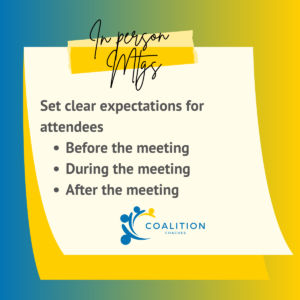
When your meeting participants know what to expect during a meeting, you are more likely to accomplish your meeting purpose, engage with the participants and host an effective meeting. A common challenge for coalition meetings is the tendency to assume that everyone knows what to expect. As the person planning the meeting, you have spent several hours (maybe even days) considering the purpose, the people, the agenda and the logistics. Alternatively, most of your coalition members and meeting participants have probably skimmed the agenda and noticed a place on their calendar for the meeting. Join us this week as we provide three recommendations on when and how to set expectations for meeting participants.
One way to set expectations is to share the agenda a week before the meeting. This was highlighted in our last blog series on accountability. In addition, you can let people know what they need to bring to the meeting, questions you want to discuss and expectations on speaking, presenting and how to engage. When you decide the type of meeting you want to have, this is a great opportunity to consider the expectations that you need to set with participants prior to the meeting.
If you are sharing updates, inviting a presenter or sharing data you will plan for a very different format than if you are priority setting, making decisions or assigning tasks. If you are planning to engage your participants in activities that require them to prepare for the meeting in advance, share with your attendees the agenda applicable prework to complete and clearly describe the type meeting you will be hosting.
As long-time meeting facilitators, we have practiced setting “ground rules,” or our new current favorite term, “guiding principles,” for meetings. Depending upon the type of meeting, you can ask for feedback from participants on developing these or you can have a draft to share with the group at the beginning. Even if you do not have a formal list of guiding principles, we highly recommend letting participants know what to expect and how to engage when you begin the meeting. For instance, one of the expectations that I currently set during video chat meetings is the timing of when to be “on camera.” If we are discussing a topic, introducing one another or actively working on something with a shared screen, this is a perfect time to be on camera. When a didactic presentation finishes and the screen is no longer shared, I often remind participants that they can come back on camera. Oftentimes, participants need a break from being on camera and by providing clear expectations, this gives them guidance on what to expect and how to engage.
One of the ways we often forget to set expectations is after the meeting. Even though the meeting is over, if we want people to stay engaged and for the meeting follow-up to be effective, we must set expectations for action items and next steps. When we send this information quickly (ideally within a week), we continue the momentum and progress from the meeting that inspires engagement and encourages participation in future meetings. This also helps with supporting accountability. Check out our Accountability Keys #8 and #9 for specific guidance on follow-up.
Which of these three areas do you want to enhance in setting expectations for your next meeting?