
You may have facilitated a fantastic meeting where you engaged participants, made important decisions and made progress on your most important projects; however, the real test of a “good” meeting happens after the meeting is over. Once you have had a good meeting, it is critically important to follow-up as quickly as possible to keep the momentum, progress and relationships going. During these days of ongoing online meetings, it can be really challenging to find the time to follow-up because you have the next meeting – and the next – and the next….
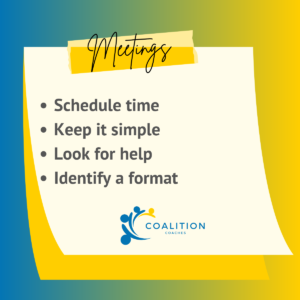
This week we highlight four things you can do to effectively follow-up from your meetings.
We are great about scheduling time for our meetings but are we scheduling time for non-meeting work? When you create space in your calendar for non-meeting working time, you create opportunities for timely follow-up. If you see every blank space in your calendar as an opportunity for more meetings, you will have more meetings and struggle with following-through with your previous meeting action items. I know it can be difficult to schedule and keep your non-meeting time blocks (I (Jennifer) personally really struggle with this). When you honor the meetings with yourself, you are able to also honor those you are working with by following through on what you said you will do!
One of the best ways to have volunteers participate in future meetings is to be able to show that you will get things accomplished. People enjoy being part of groups that get things done. Unless you have a group that is required to keep detailed minutes (such as a government committee), your follow-up doesn’t have to be complicated. At the end of the meeting, be clear about decisions made, action items/steps, who is responsible and what is the timeframe for follow-up. If you (or your notetaker) is in a virtual meeting, these can be written in “real time” which makes follow-up much easier. Also, consider sharing your screen to confirm everyone is clear on the decisions and action items. When we keep the follow-up simple, it’s easier for us to be able to follow-up quickly and to maintain momentum from our meetings.
One of the challenges in following-up from meetings happens when one person is trying to take care of all aspects of the meeting – from planning to facilitating to following up. When hosting a meeting, consider the different people on your staff (or highly engaged volunteers) who can provide specific leadership in different aspects of the meeting. Utilize the strengths of your team to share the roles and responsibilities for each aspect of the meeting. During this process, identify one person who will lead the follow-up efforts. This person may lead all of the follow-up efforts for every meeting or you may have different people for each meeting.
Consider a simple format that includes decisions made and action items at the beginning of the meeting notes. Also, include both action items and names in the body of the email (rather than just in the attachments). For small working groups, I often create notes as part of an email that is ready to send when the meeting is over. As you consider your follow-up plan, consider which formats and approaches will work best for your workgroup, committee, network or council. Also, the benefit of having an agreed upon format/template is that you can share the responsibility of follow up (and not always be the one doing it yourself!)
So what about you? What are you going to do to support timely follow-up from your meetings?