
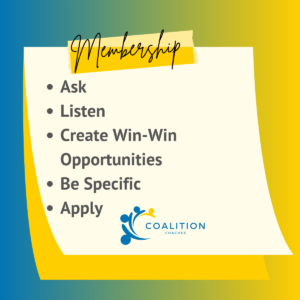
Even though coalition members may have initially joined because they believed in the coalition’s mission, this won’t be enough to keep them engaged. If you want them to actively participate, they need to know how they can participate. They also need to know that investing time in the coalition is a good use of their time. Join us this week as we provide steps to engage coalition members.
The first step in better understanding your coalition members is to ask questions. You may ask questions during a virtual meeting, breakout room, electronic survey or a one-on-one conversation. While you don’t have to use every method, you do want to find what works for you to get to know your coalition members. Ask about the coalition member and the organization that member represents.
Pay attention to what they are telling you. Focus on their perspective and context. Watch their non-verbal communication. Notice when they get excited. Recognize when they appear overwhelmed. Take notes. Ask clarifying questions. Focus on their answers more than your responses. When you actively listen, you show them that they are important to you and your coalition.
When you can connect coalition members to roles that benefit both them and the coalition, everyone wins. One of the best ways to actively engage coalition members is to find meaningful roles that the coalition member would want to do. If you are struggling with participation and engagement, reflect on the types of roles you are asking coalition members to play. If they are not meaningful and valuable to them and their organization, they may participate for a time but it won’t be sustainable.
How can coalition members contribute? What is realistic? Are there options for different levels of engagement? If you want your members to take specific actions, be clear and specific about those actions. You may want them to share coalition resources with their staff or make recommendations on coalition priorities. Depending upon the coalition member, she may provide expertise on a topic or share evaluation data. If you find that some of your coalition members are confused or unclear, ask more questions and practice being more specific and clear.
Take immediate action. Share resources that align with their interests. Connect them to a new partner. Follow-up with a “thank you” for their time. Identify common themes among coalition members. Translate those common themes into new work plan objectives for the coalition.
Download this free resource where we provide additional guidance on how to develop the skill of creating a neutral forum that will help you keep your coalition engaged.
______
Join us the 3rd Thursday of the month for our live Coalition Spotlight Conversation: https://info.coalitioncoaches.com/coalition-spotlight