
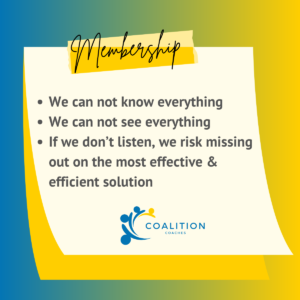
When the Coalition Coaches work with teams on membership engagement the art of intentional listening is something we always encourage. And it is an important skill that can be improved with time and effort. Reflecting on this skill reminded Jennifer of an experience she had with her family. This is a reminder of how important it is that we listen to all members of our team in order to come up with the best solution and achieve the collective impact we want to achieve.
Join us this week as we discuss 3 reasons it is incredibly important that we listen, really listen to those on our teams.
A few years ago Jennifer’s daughter had breathing difficulties associated with a cold that went to her chest. She had something very similar the previous October and we had our first visit to the hospital. It was scary, but the doctors and others listened, really listened to our entire story. We worked together on a solution and she was better overnight and able to go home late the next day.
The second time we had a similar situation and once again went to the hospital. Our family was hopeful that they would be able to care for her well just as they did previously. However, they did not listen. They had their ways of doing things, their plans, their interventions and they pushed them on us. Thankfully, she did eventually improve; however, we spent two nights in the hospital and she suffered much more than she did previously.
Have you had an experience like this? Think about the contrast of how it felt to be listened to versus the consequences and frustrations of not being heard.
This experience taught me the importance of listening, particularly when we are the ones who are the decision-makers. There are three reasons, it’s really important that we take the time and the stance of listening to others on our teams.
There are ways to signal that you are listening such as reducing distractions (phones, email alerts etc), making eye contact and giving subtle cues such as nodding your head to indicate that you are listening. Other ways to indicate your partner is being heard is to reflect back what they are saying; “That sounds frustrating when…” . Or simply repeating back what you’ve just heard does the job, it also helps you stay engaged in the conversation. Finally, be mindful of jumping in with your own story or offering advice and solutions. Give space, it goes a long way.
______
Join us the 3rd Thursday of the month for our live Coalition Spotlight Conversation: https://info.coalitioncoaches.com/coalition-spotlight